
Thin wavy hair has a specific problem most advice ignores: the waves themselves can actually make hair look thinner, not thicker, because loose bends catch light and reveal gaps between sections. Stylists who work with fine wavy textures know the fix isn’t more product, it’s smarter shape. The right cut creates the illusion of density before a single tool touches your head. Here are 18 cuts and styling approaches built specifically around that goal.
Blunt Bob at the Collarbone
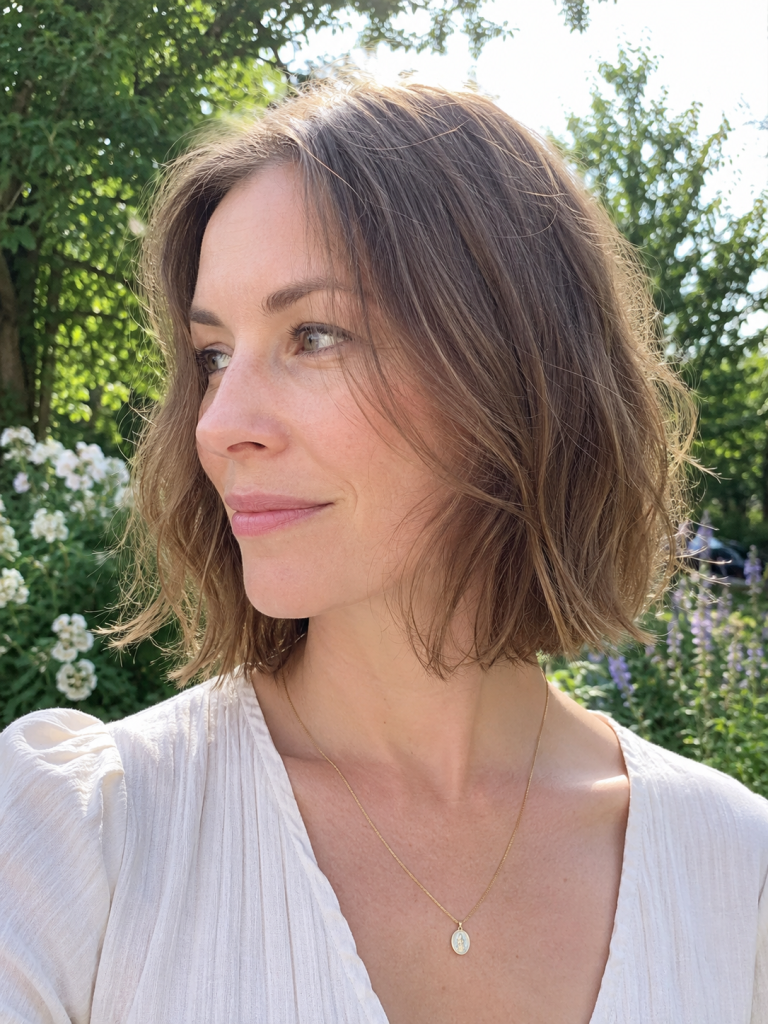
Skip the layers here. A one-length blunt bob keeps every strand ending at the same point, which stacks the hair and reads far thicker than it is. Waves add soft movement to the blunt line without breaking it up. Ask your stylist for a subtle undercut at the nape to prevent bulk at the bottom while keeping the top full.
Long Layered Shag
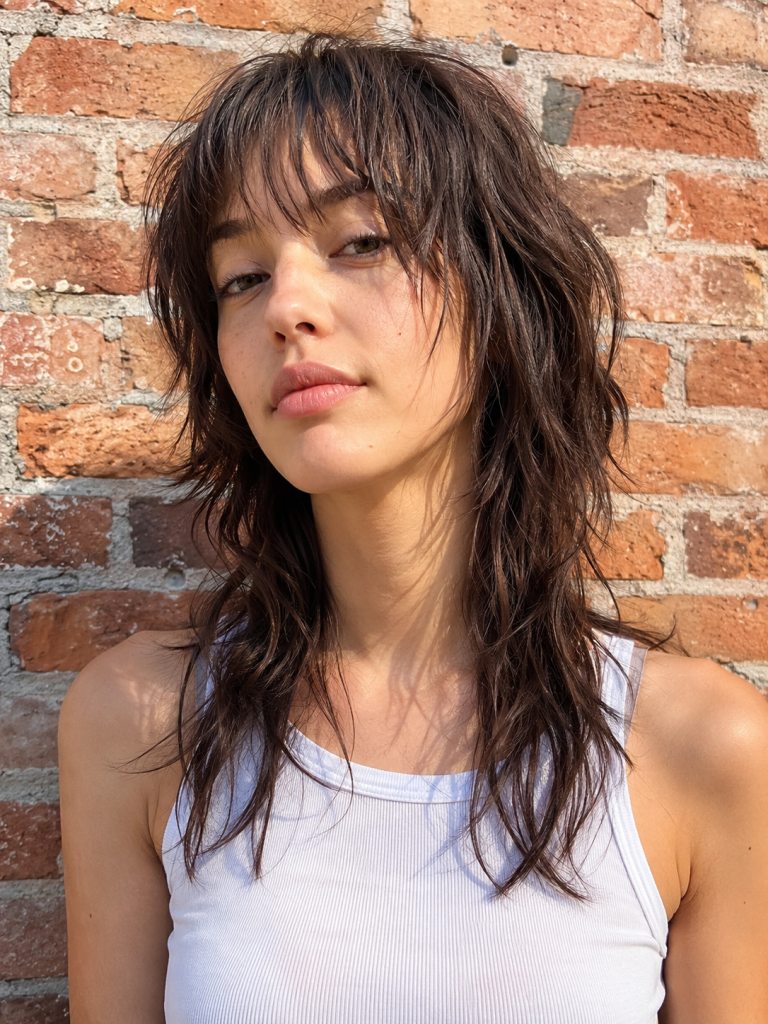
Choppy, face-framing layers cut throughout the length give thin wavy hair texture it can’t create on its own. The shorter pieces up top add lift at the root, and the longer layers below let waves cascade instead of falling flat. This shape works especially well styled with a diffuser for tousled, lived-in movement.
Curtain Bangs with Soft Layers
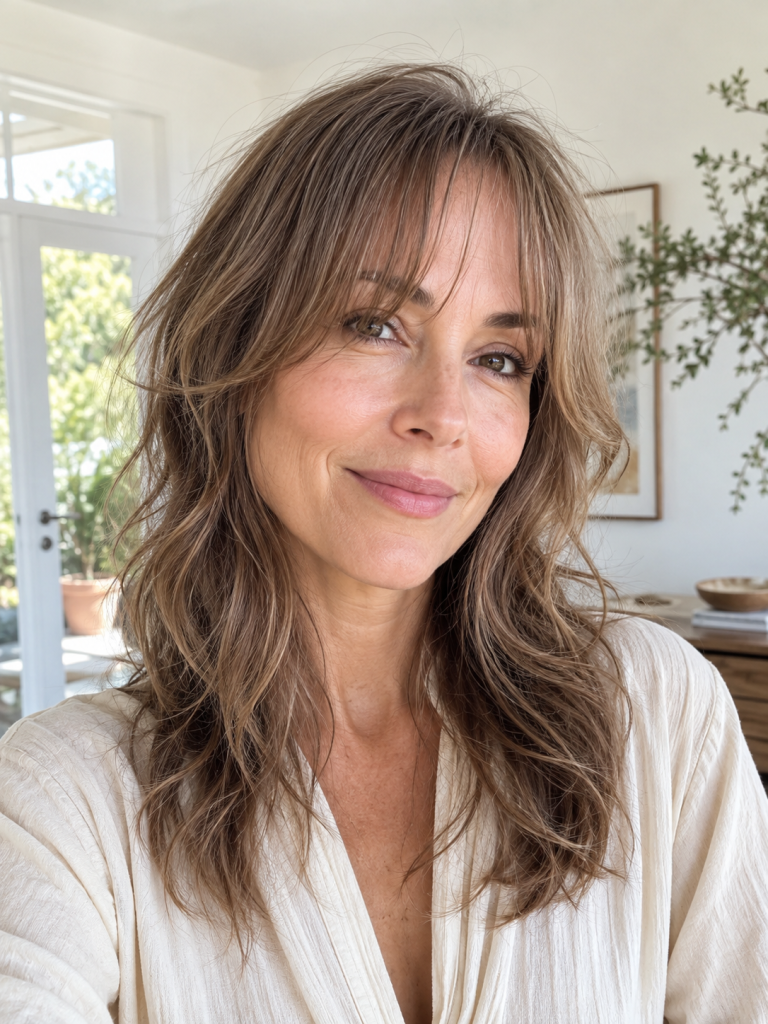
Curtain bangs split down the middle and blend into face-framing layers, drawing the eye outward and away from thin density at the crown. Waves make the bangs fall naturally without heavy styling. Ask for the bangs to hit just below the brow so they blend seamlessly as they grow out.
Wolf Cut
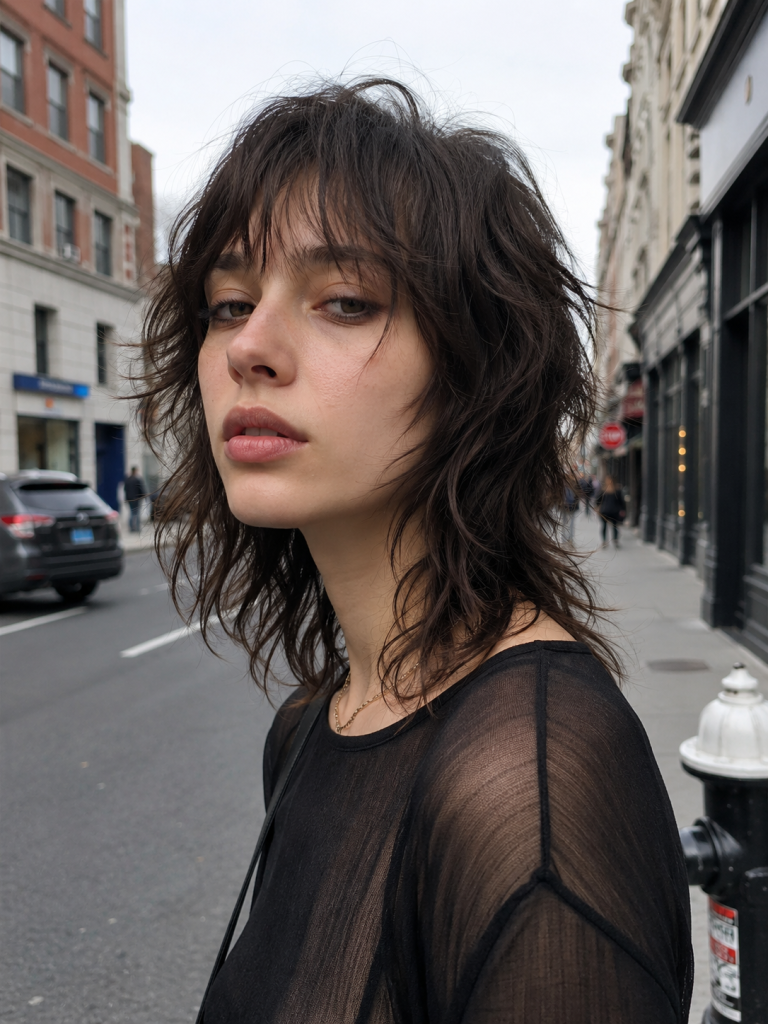
Heavy layering through the crown paired with shaggy, textured ends gives thin wavy hair serious volume up top. The wolf cut relies on choppy, uneven pieces rather than smooth blending, which tricks the eye into seeing more hair than there actually is. Pair it with a texturizing spray for extra grip.
Lob with Face-Framing Layers
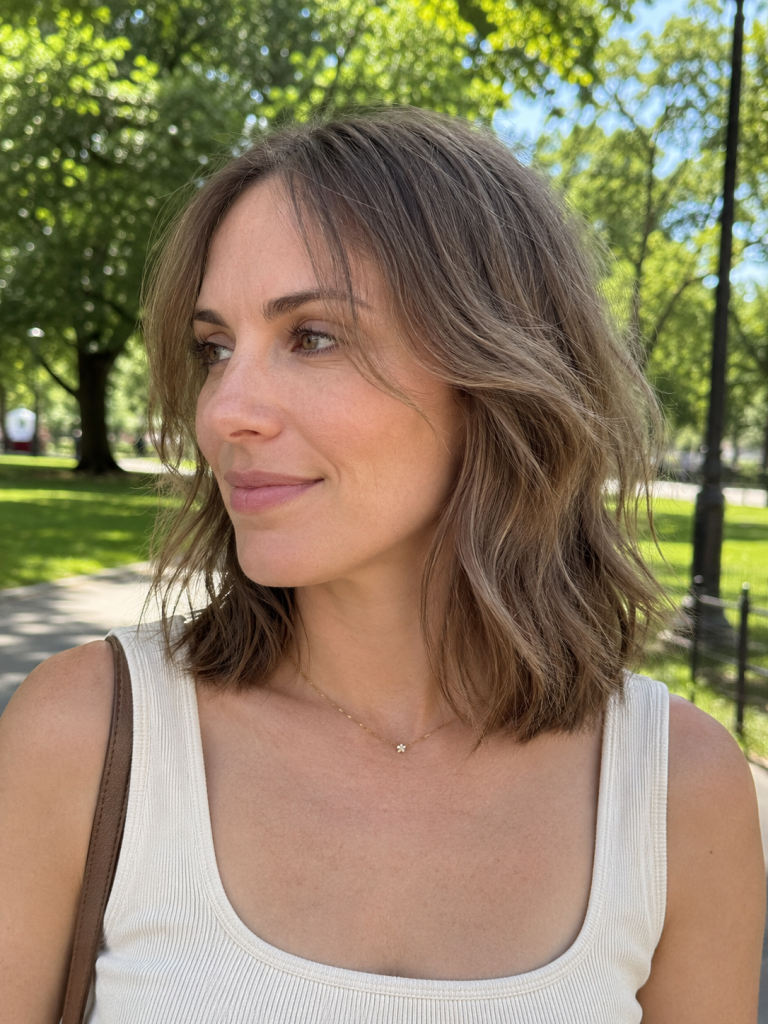
A shoulder-length lob keeps enough weight for waves to hold their shape while layers around the face add lift and movement. This length hits a sweet spot for thin hair, long enough to look intentional, short enough to avoid stringy ends. Round-brush the front sections for a fuller finish.
Feathered Layers
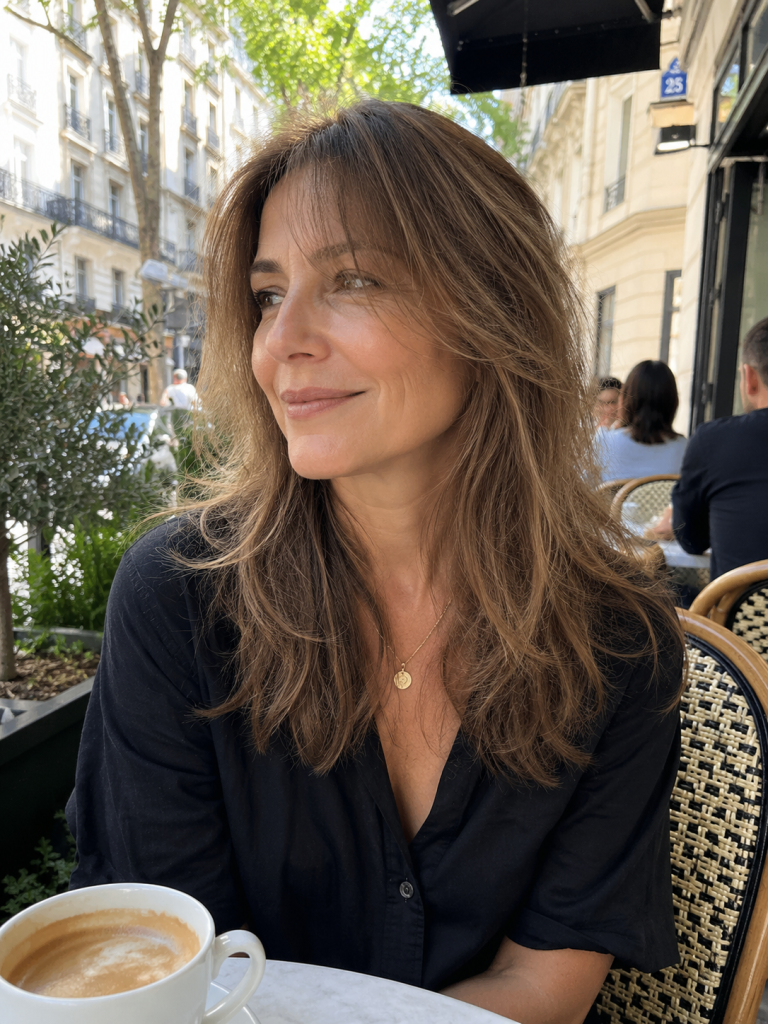
Feathering involves cutting thin, angled sections throughout the hair to create soft, wispy movement rather than one heavy layer. On wavy hair, this technique lets each wave separate and catch light individually, building the appearance of more strands. It works best on medium to long lengths where there’s room for the feathering to breathe.
Volumizing Pixie Crop
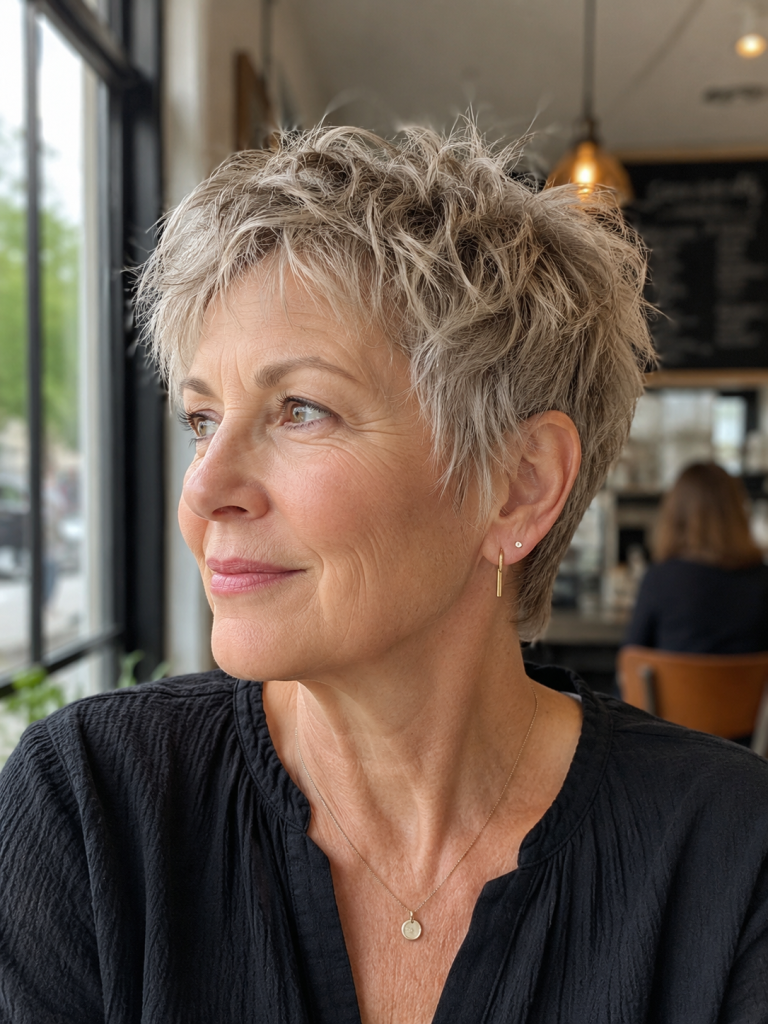
A textured pixie with choppy layers on top gives thin wavy hair nowhere to fall flat. Short length means less weight pulling down the waves, so they naturally lift and hold shape all day. Use a lightweight mousse at the root before diffusing to maximize the volume this cut is built for.
Root-Lifted Blowout
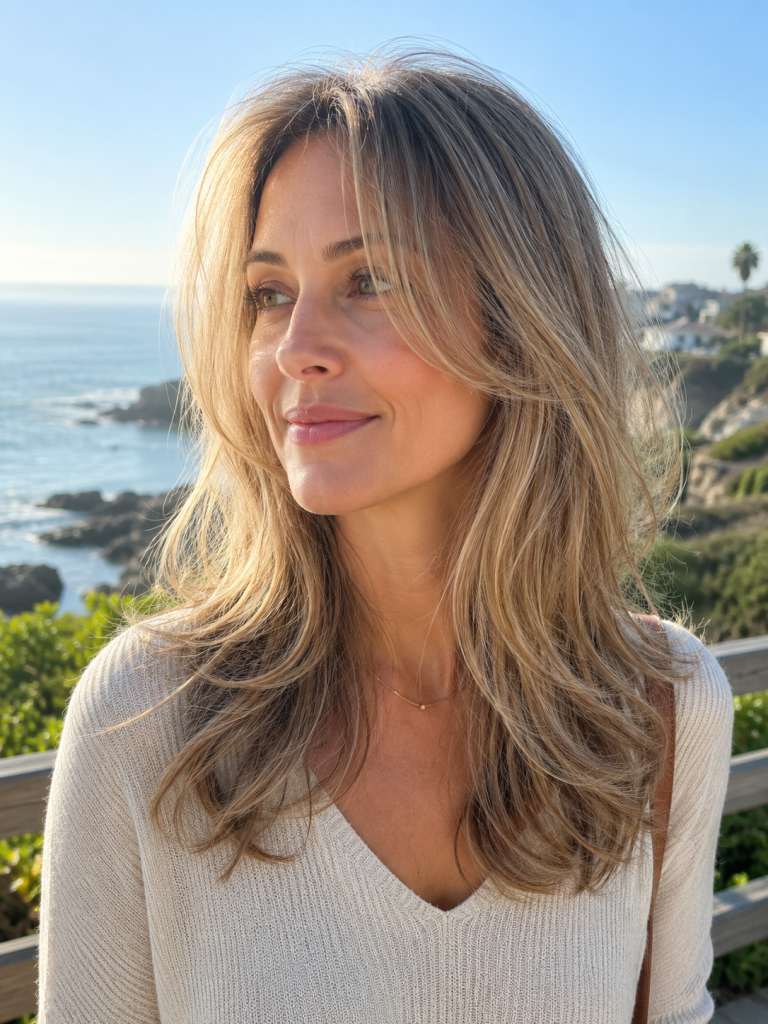
This isn’t a cut, it’s a technique, and it might matter more than any haircut on this list. Blow-drying the roots in the opposite direction they naturally fall, then finishing with a diffuser on the ends, builds height that lasts through the day. Combine this with any layered cut above for maximum effect.
Low Textured Bun
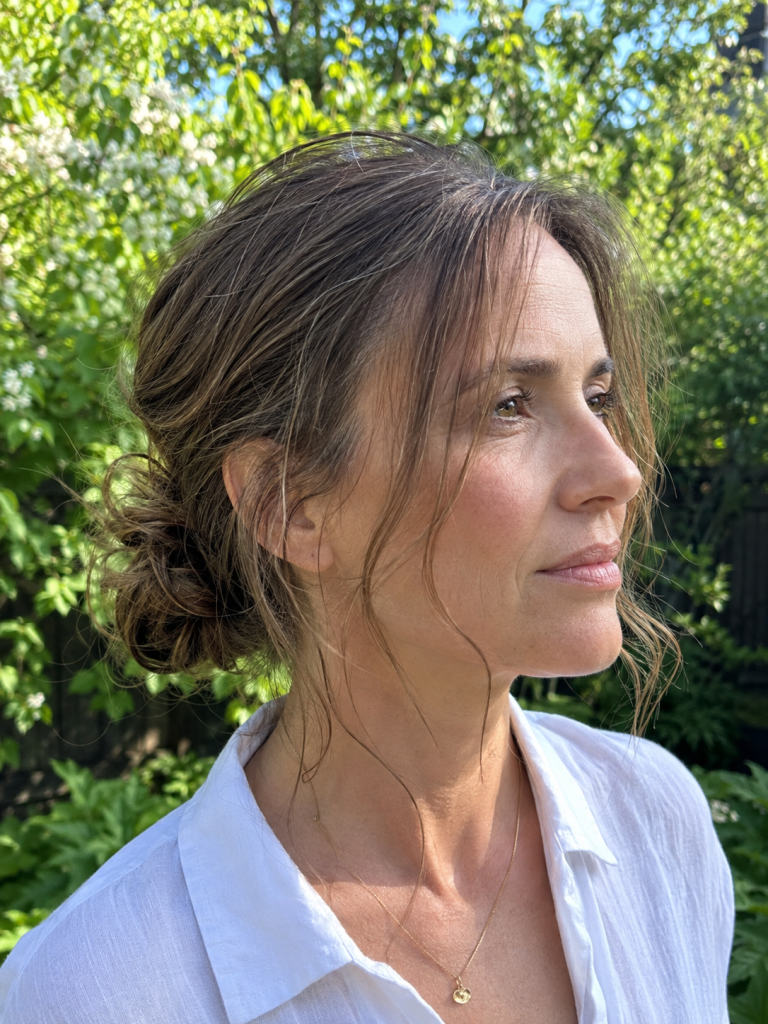
Pulling wavy hair into a deliberately messy low bun, with pieces left loose around the face, disguises thin areas that a sleek updo would expose. Backcomb slightly at the crown before gathering hair to add fullness underneath. This style works well on second or third day hair when waves have relaxed slightly.
Side-Swept Waves
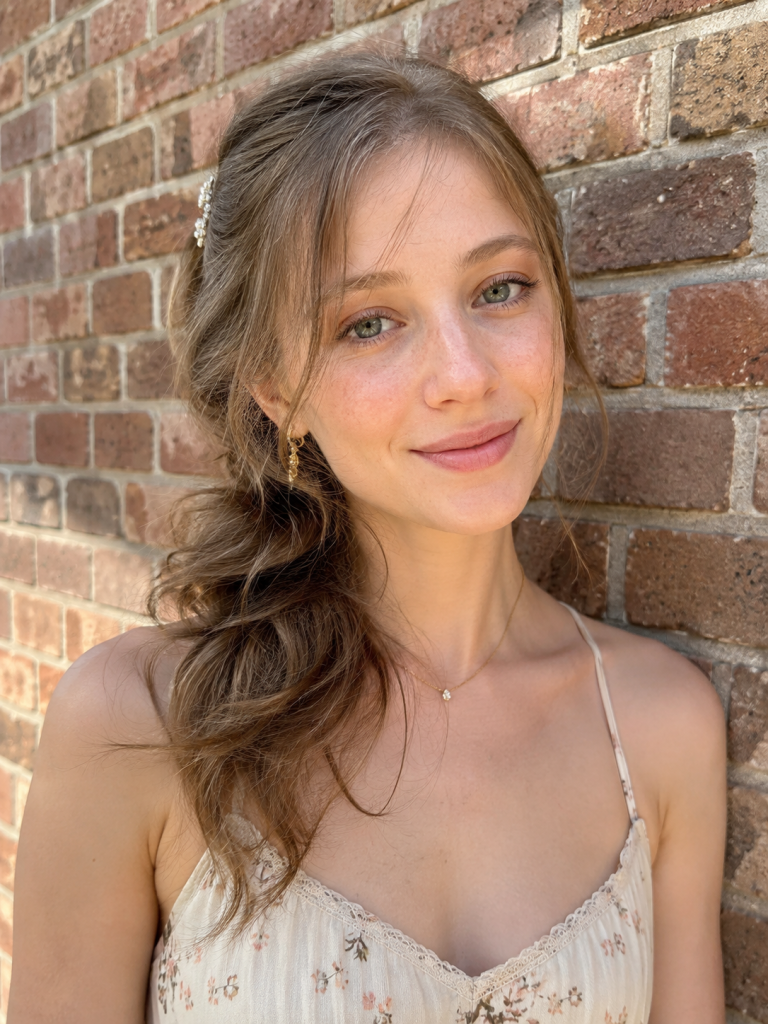
Sweeping all the hair to one side concentrates volume visually in a single area rather than spreading thin density evenly across the head. Secure with a few bobby pins hidden underneath for hold. This works particularly well for shoulder-length or longer wavy hair styled for an event or night out.
Half-Up Twisted Style
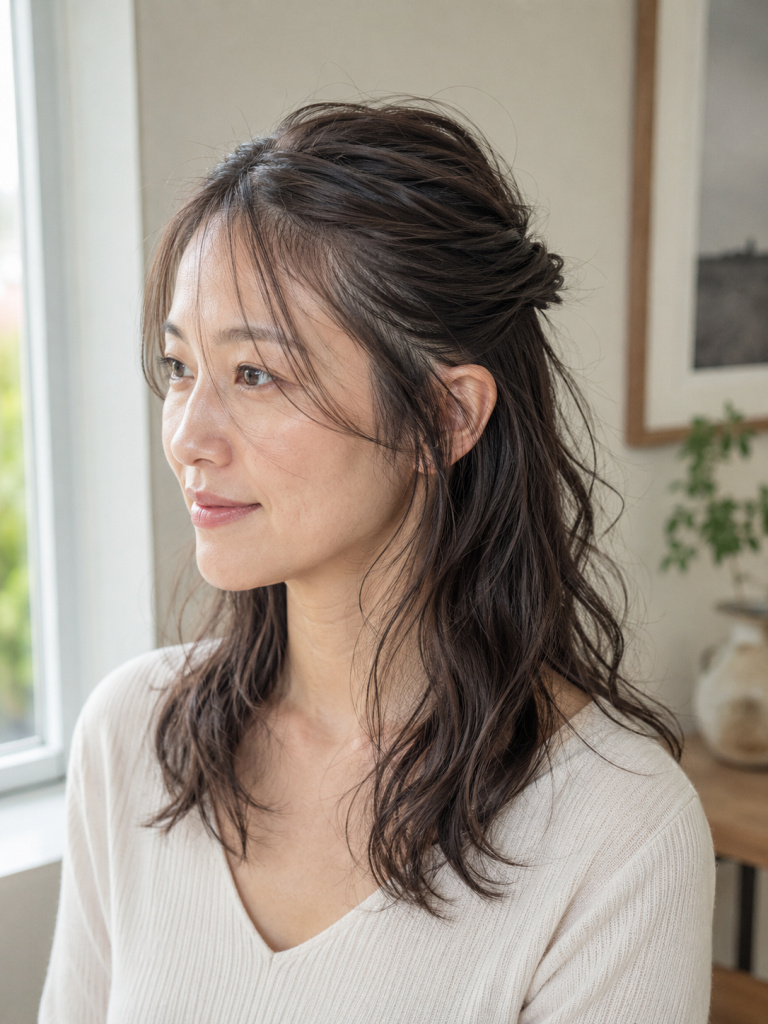
Twisting two small sections from the front and pinning them at the crown lifts hair away from the scalp instantly. The rest of the waves stay loose below, so the style reads full without requiring an actual updo. It’s a five-minute option that holds up well through a full workday.
Middle Part with Deep Side Layers
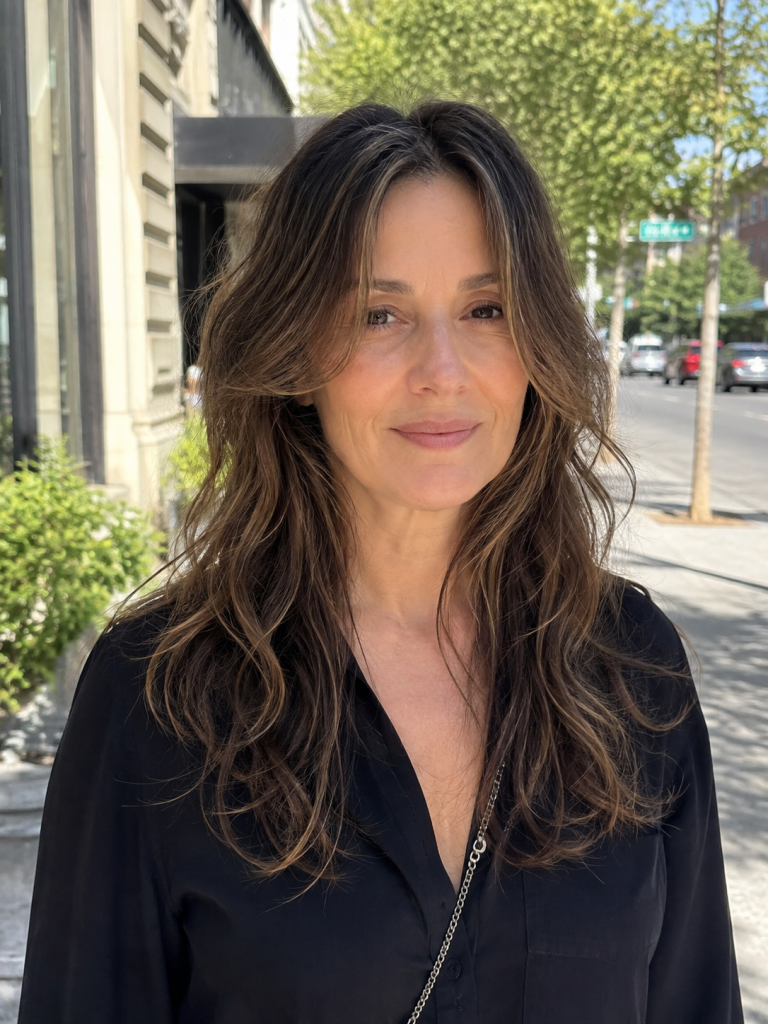
A center part combined with heavy layering on both sides pulls attention toward face-framing movement instead of the flatter crown area. Waves on either side of the part naturally frame the cheekbones. This works on nearly any length and suits most face shapes when layers are cut at an angle.
Braided Crown
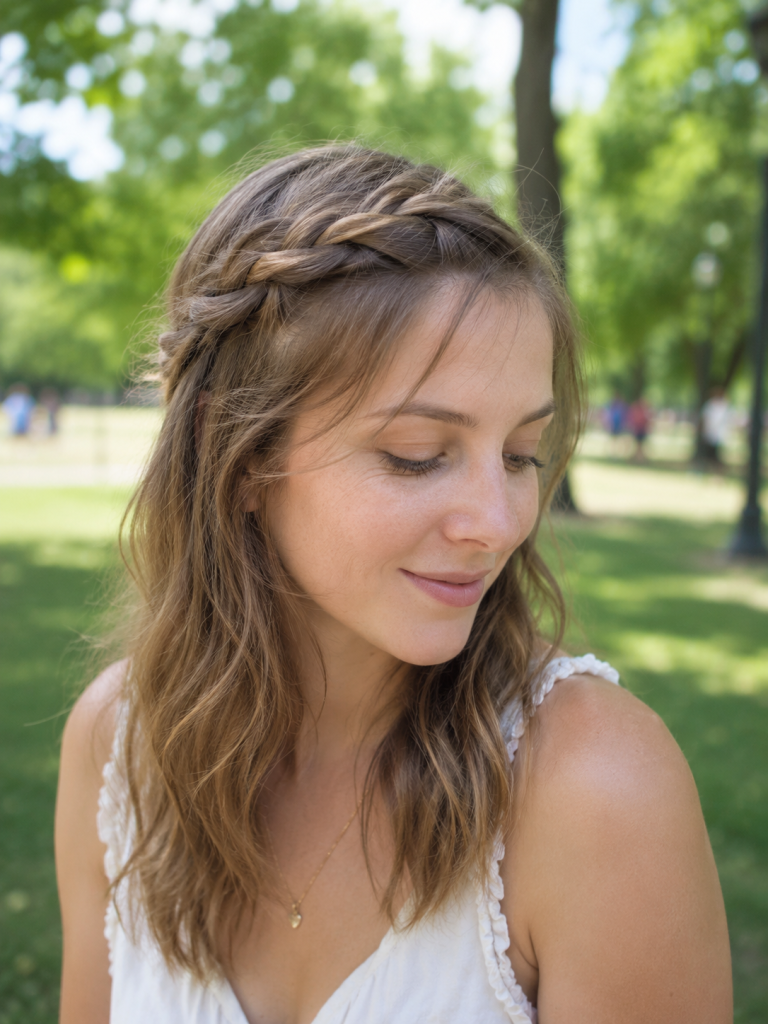
A loose braid wrapped across the top of the head, French-braid style, creates instant texture and height at the root that thin hair struggles to hold on its own. Pull small pieces from the braid to loosen it for a more natural, undone look. This style also keeps waves off the face on humid days.
Textured Crop with Undercut Sides
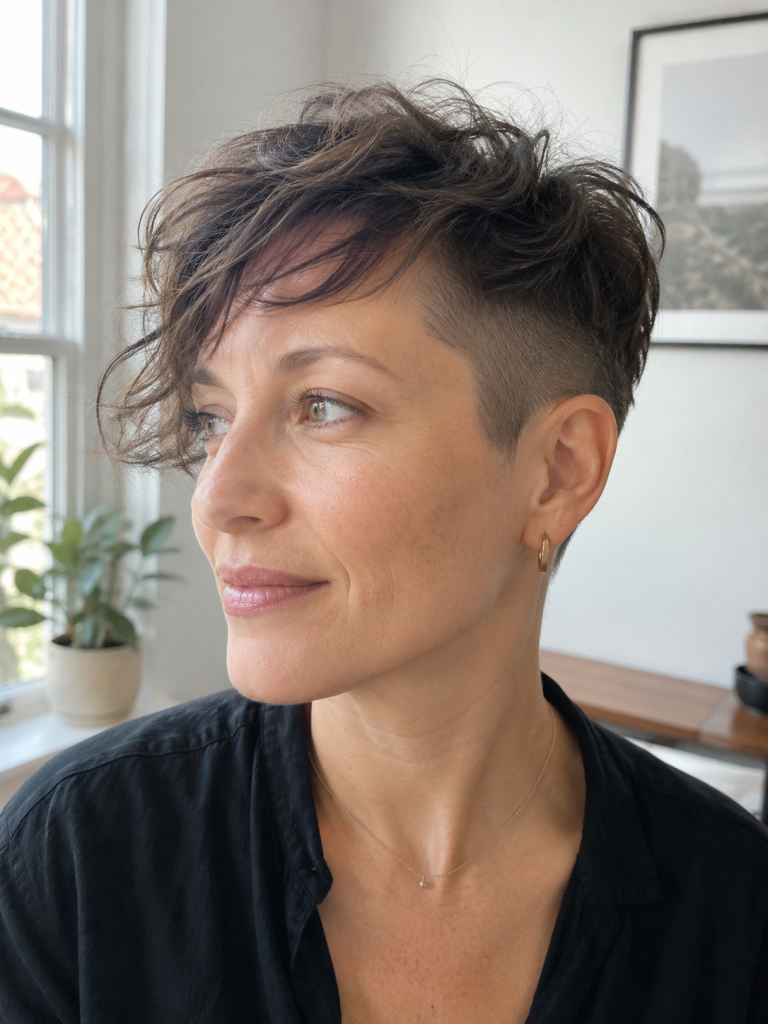
Shaving or closely trimming the sides while keeping length and waves on top removes bulk from areas that don’t need it and puts all visible volume where it counts. This cut suits thinner density especially well since less hair overall means less risk of looking sparse. Style the top with a matte texturizing paste.
Beachy Wave Sets with a Salt Spray
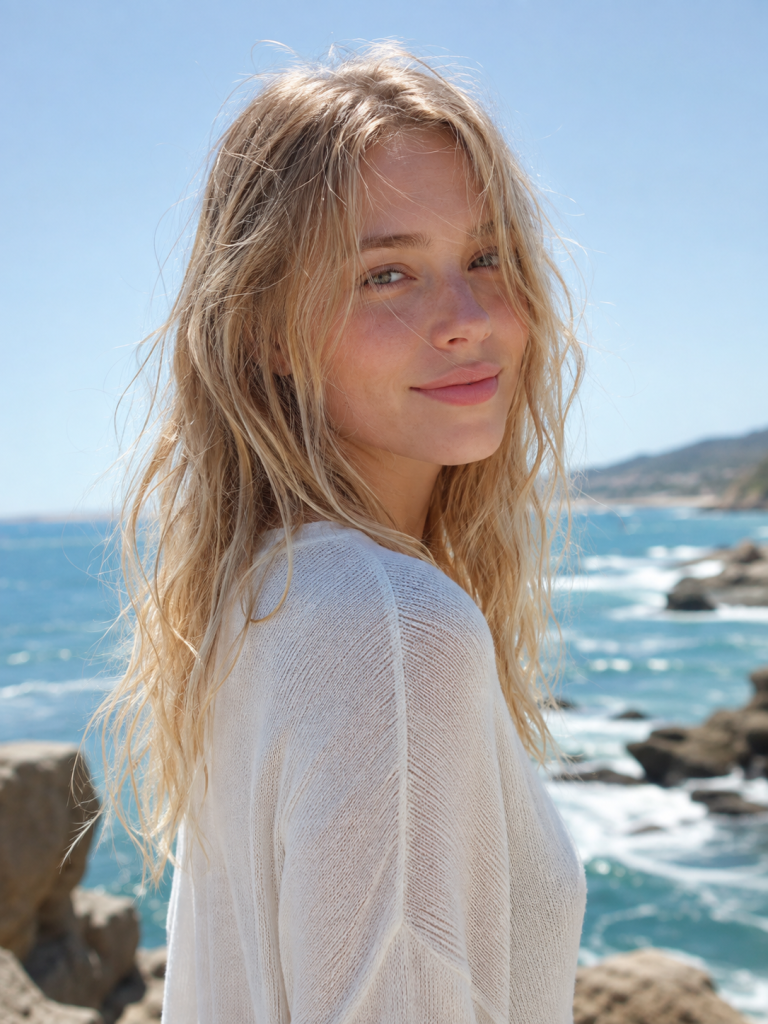
Setting damp hair in loose waves using a wand or flexi rods, then finishing with a lightweight salt spray, builds texture that naturally disguises thinness. The key is using a light-hold formula, heavy products weigh fine waves down instead of lifting them. Scrunch gently once dry rather than brushing through.
Money Piece Highlights
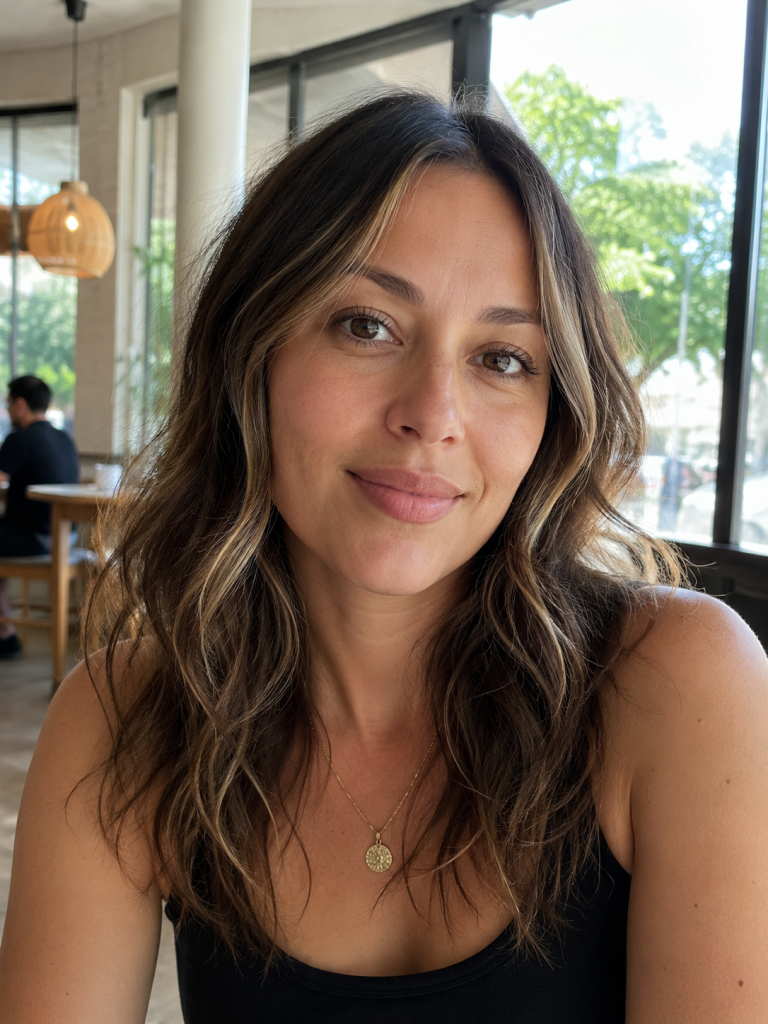
Placing lighter pieces around the face draws the eye toward brightness and dimension rather than density. On thin wavy hair, this contrast technique creates the appearance of more layers and depth without cutting a single strand. Ask for a soft, blended placement rather than a hard money piece for the most natural effect.
Balayage with Root Melt
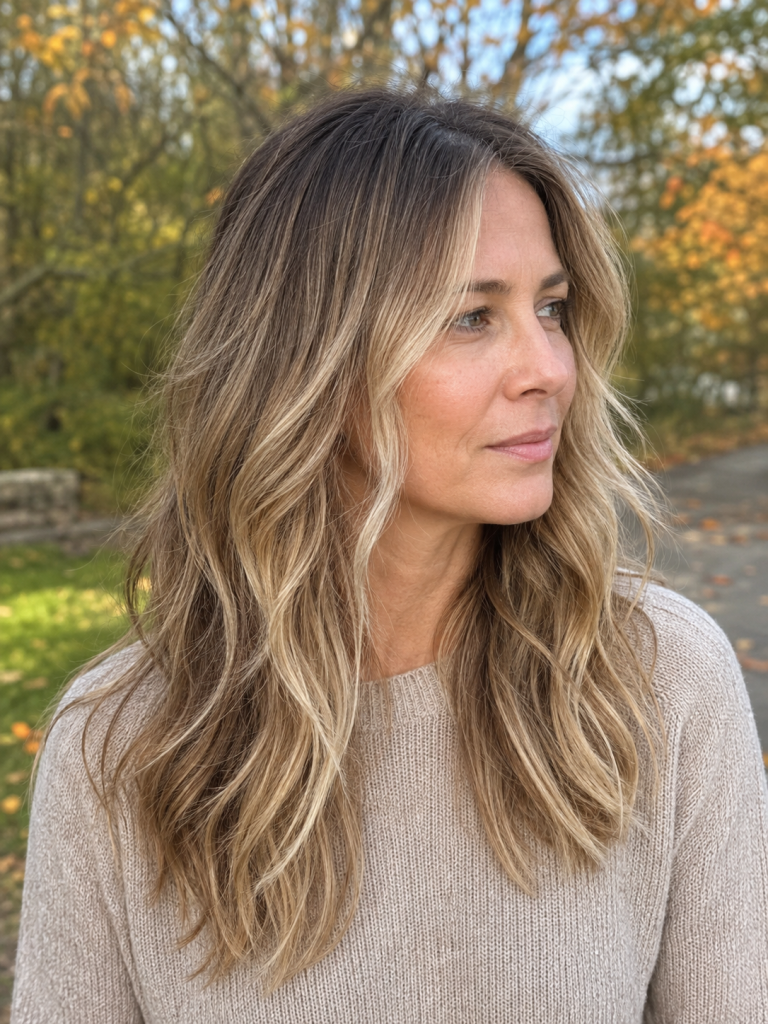
A soft, hand-painted balayage that melts seamlessly from the natural root color outward adds dimension throughout the length, which tricks the eye into perceiving more texture and volume. Avoid heavy, solid color blocks, they can flatten the appearance of waves. This coloring approach pairs especially well with any of the layered cuts above.
High Half-Ponytail with Waves Left Loose
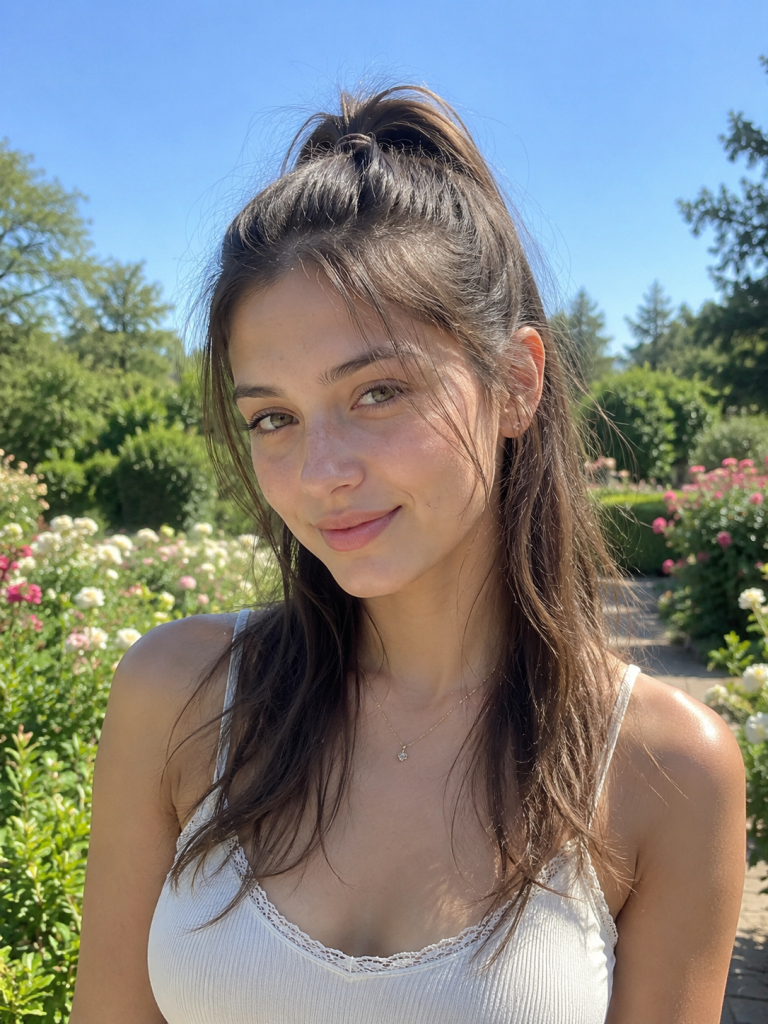
Gathering the top half of the hair into a high ponytail while leaving the bottom half loose and wavy lifts volume at the crown instantly. The elevated section also gives the illusion of a fuller ponytail than the hair actually has. Tease the base slightly before securing for extra hold and lift.
